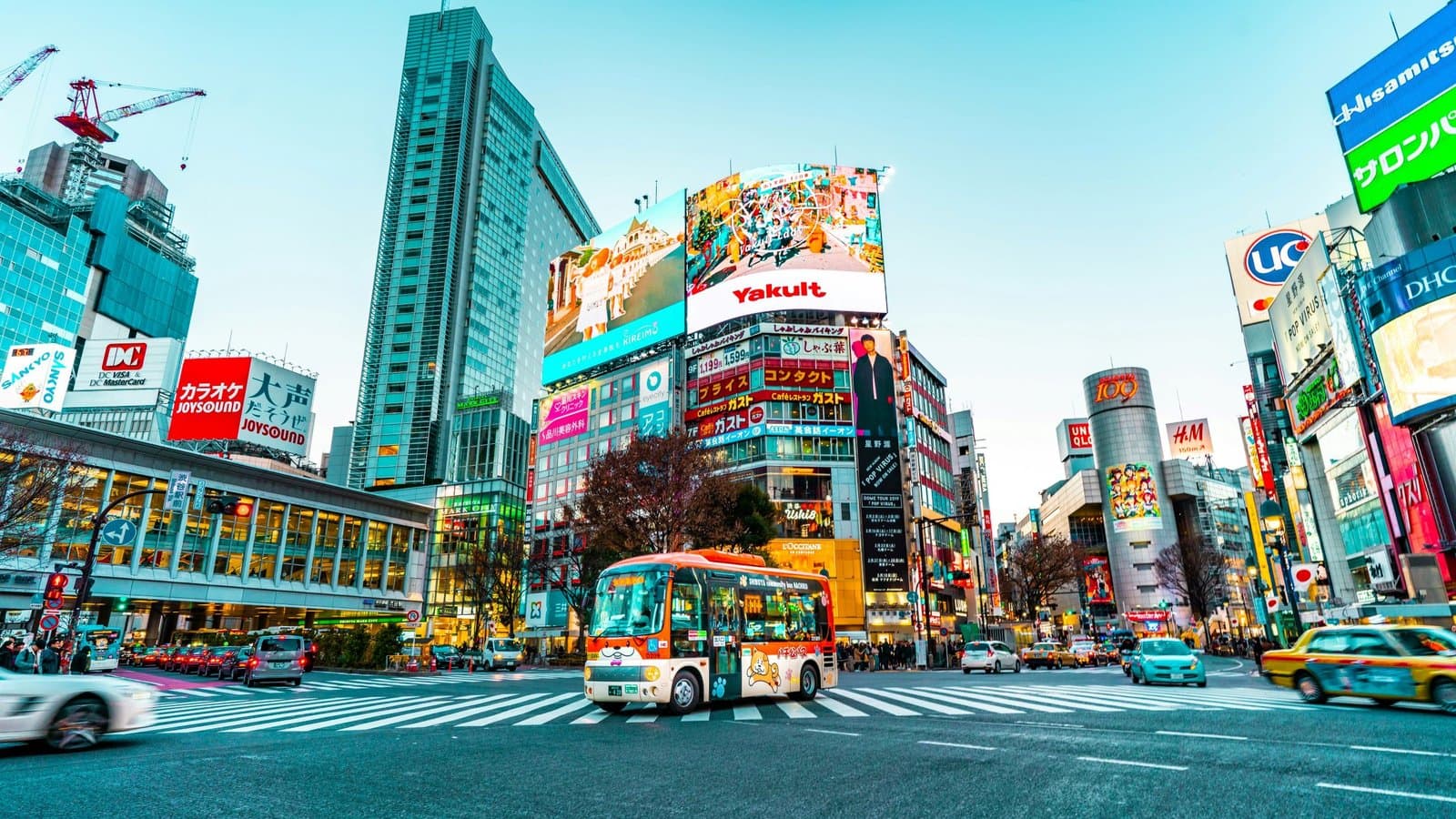
Shibuya Crossing — Tokyo announces itself immediately.
Milo’s Brief
Tokyo
Everything you actually need to know before traveling to Tokyo — without spending hours researching it.
Immigration, airport arrival, luggage, connectivity, transportation, money, weather, and family logistics — distilled by Milo.
“Pack one overnight bag. Ship everything else.”
Milo’s Tokyo in 60 Seconds
Landing at Narita? Check the Limousine Bus schedule against your actual arrival time before you fly — don’t assume the bus will still be running.
Moving between hotels or cities? Ship your big bags with Takkyubin and travel with just an overnight bag.
Traveling as a family? Don’t assume a taxi is automatically cheaper than a private transfer — compare the actual price for your group and luggage.
Going to Disney? Have reliable mobile data ready before park day. The Tokyo Disney Resort App handles wait times, bookings, and Premier Access.
Carry some cash. Tokyo is highly card-friendly, but you’ll still hit places and situations where cash is the only option.
Traveling with kids? Tokyo’s trains are excellent, but rush hour plus strollers plus huge stations can turn a simple trip into a bad one.
Getting In: Immigration & Entry
Before you fly: check your nationality’s current visa requirements, complete Visit Japan Web where applicable, and save your confirmation and QR information somewhere accessible offline.
Immigration rules change. Treat the official Japanese government source as the final authority here, not this page — Milo interprets what matters, official sources establish the actual rules.
Official sources
Airport → Tokyo
The airport you land at changes how much planning the rest of your arrival needs.
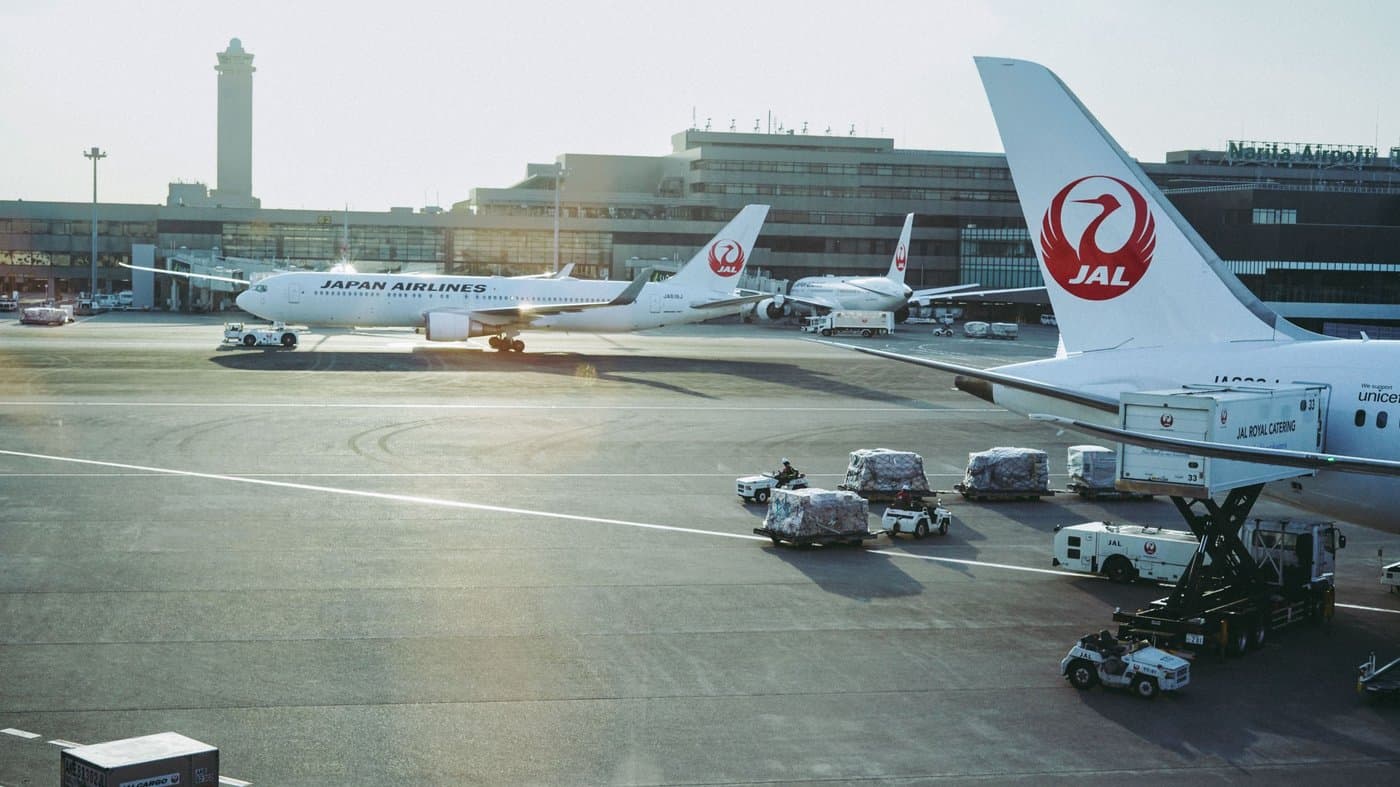
Narita Airport — where a lot of Tokyo trips begin.
Haneda vs. Narita
Milo’s Pick
If you have a choice, Haneda is generally the easier Tokyo arrival.
Watch out
Narita isn’t difficult — it simply requires more planning because of the distance from central Tokyo (roughly 60–90 minutes versus Haneda’s ~30, as a rough range, not a guarantee).
Prices may vary. Milo may earn a commission if you book through these links.
Narita → Tokyo transfer
Milo’s Pick
Limousine Bus for most families with real luggage — you load your bags once and get off near your hotel, instead of dragging suitcases through a major train station.
Best for
Families, large luggage, hotel-to-hotel convenience.
Alternative
Train (Narita Express or Keisei Skyliner) for couples or solo travelers comfortable navigating stations with their own bags — faster, but you’re on your own with luggage.
Watch out
Check the timetable against your actual arrival time before you fly — bus schedules vary by route and can finish earlier than you’d expect. Don’t assume a bus is running just because it usually is.
Milo Tip
On our own Narita arrival, a pre-booked private transfer worked out cheaper than — or very close to — a regular taxi, and we were picked up in an Alphard, considerably more comfortable than a standard taxi for a family with several large suitcases. Don’t assume "private transfer" automatically means "more expensive than a taxi" — for a family with real luggage, it’s worth comparing the actual price before defaulting to a taxi.
Prices may vary. Milo may earn a commission if you book through these links.
Ask Milo: “I’m landing at Narita with two kids and four large suitcases — which transfer should I take?” →Luggage Strategy
Tokyo’s train system works brilliantly. That doesn’t mean dragging multiple large suitcases through it is a good idea.
Takkyubin (hotel-to-hotel luggage forwarding) is genuinely useful for Tokyo → Kyoto, Tokyo → Osaka, or any hotel-to-hotel move, especially with kids or several large bags. Arrange it so bags arrive at least a day ahead of your stay where possible.
If you’re using Tokyo as a hub — leaving the country from here, or continuing elsewhere with excess luggage — airport storage can be considerably easier than moving everything through multiple hotels. Prices and availability vary by location and size, so don’t treat any specific figure as fixed.
Tokyo also has extensive lockers at major stations, useful for a short side trip when you’re returning to Tokyo later and don’t need your full luggage with you.
Luggage Forwarding
Milo’s Pick
Hotel-to-hotel or airport luggage delivery — skip carrying bags through stations entirely.
Book luggage deliveryPrices may vary. Milo may earn a commission if you book through these links.
Milo’s luggage strategy
Pack one overnight bag. Ship everything else.
Connectivity
eSIM is the right call for most travelers — install it before departure, confirm your phone is unlocked, and keep your primary SIM available if you need it for SMS or two-factor codes.
If Disney is on your itinerary, make sure you have reliable mobile data before park day — the official Tokyo Disney Resort App is central to the park experience, including wait times, bookings, and Disney Premier Access.
eSIM
Milo’s Pick
Milo’s eSIM pick for Japan — install it before you land, test it before you need it.
Get the Japan eSIMPrices may vary. Milo may earn a commission if you book through these links.
Milo Tip
Don’t make your first connectivity test while standing at the park entrance.
Getting Around & Money
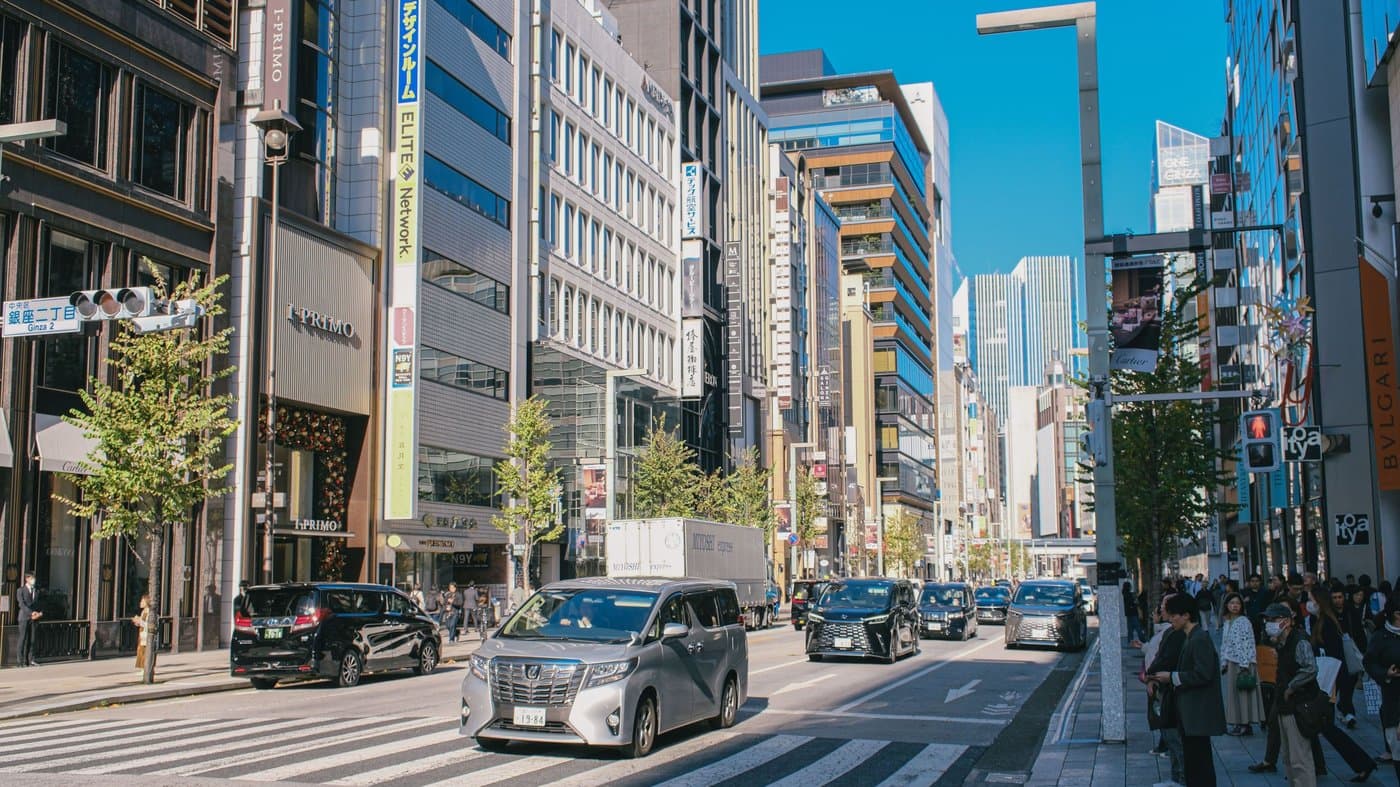
Ginza — Tokyo’s streets are orderly, but still built for traffic as much as pedestrians.
Trains & subway
The right default for most travelers. With kids during rush hour, plan around the crowds rather than fighting them.
IC card (Suica / PASMO)
Covers trains, buses, and a lot of small purchases — worth getting on arrival rather than buying individual tickets everywhere.
Heavy luggage
Lean on luggage forwarding, taxi, or a private transfer instead of the train.
Short distances
Just walk.
Cash
Tokyo is much easier with cards than many first-time visitors expect — but carry cash anyway. Don’t let "Japan is cashless now" become an excuse to carry zero cash; enough for a few small purchases and one unexpected cash-only situation is plenty.
Tipping
Isn’t part of everyday Japanese service culture — don’t tip.
Weather & When to Go
Tokyo isn’t a "never visit in summer" destination — but heat and humidity change how much walking a family can comfortably do more than the season itself.
Spring
Mild and beautiful, but crowded and pricier. Amazing, but budget for it.
Summer
Hot, humid, and rainy — the season that’s genuinely harder with kids, mostly because of how much walking a family can comfortably do.
Autumn
Comfortable and attractive weather — the best overall balance for most travelers.
Winter
Cold, dry, often clear — underrated, and worth considering if you’re flexible.
Tokyo With Kids
Tokyo is exceptionally family-friendly in its infrastructure — that doesn’t mean every experience is friction-free with a stroller in tow.
Stroller
Bring a lightweight folding stroller rather than a large all-terrain model.
Stations
Elevators exist, but they aren’t always where you’d expect — allow extra time.
Rush hour
If you can avoid major train transfers during peak commuting hours, do it.
Food
Convenience stores are genuinely useful — not just an emergency backup.
Bathrooms
Public facilities are generally excellent.
Things We Wish We Knew
Check the airport bus schedule before you land, not after.
Ship your big bags — don’t carry every suitcase everywhere just because the trains technically allow it.
Don’t assume a private transfer costs more than a taxi — compare the actual price.
Don’t underestimate how much walking a big Tokyo station transfer involves with real luggage.
Tokyo has surprisingly few public trash cans — you’ll end up carrying trash longer than expected.
Learn the local escalator-side etiquette, but don’t obsess over it.
Don’t plan a family day around peak rush hour if you can help it.
Milo’s Quick Picks
A few practical things worth arranging before you go.
eSIM
Milo’s eSIM choice for most travelers
Best for: Most travelers who want data working the moment they land.
See this option →Airport transfer
Milo’s pick for a private transfer from Narita
Best for: Families, late arrivals, or several large suitcases.
See this option →Airport transfer (Haneda)
Haneda Airport Limousine Bus
Best for: Families with real luggage landing at Haneda instead of Narita.
See this option →Luggage forwarding
Hotel-to-hotel/airport luggage delivery
Best for: Anyone following Milo’s "pack one overnight bag, ship everything else" advice.
See this option →Milo’s Bottom Line
Tokyo is easy once you understand the logistics — but airport transfers, station transfers with luggage, connectivity, and seasonal weather are exactly where unnecessary friction creeps in. Sort those out ahead of time and the rest of the trip takes care of itself.
Before you leave